

Signs That a Tree May Be Dangerous: What to Look Out For

Trees are a valuable part of any garden, providing shade, privacy and an attractive natural feature. However, like any living thing, trees can develop problems over time that may affect their health and stability.
While not every damaged or unhealthy-looking tree is dangerous, certain warning signs should never be ignored. Knowing what to look out for can help you identify potential problems early and reduce the risk of damage to your property or surrounding areas.
1. Large Dead or Hanging Branches
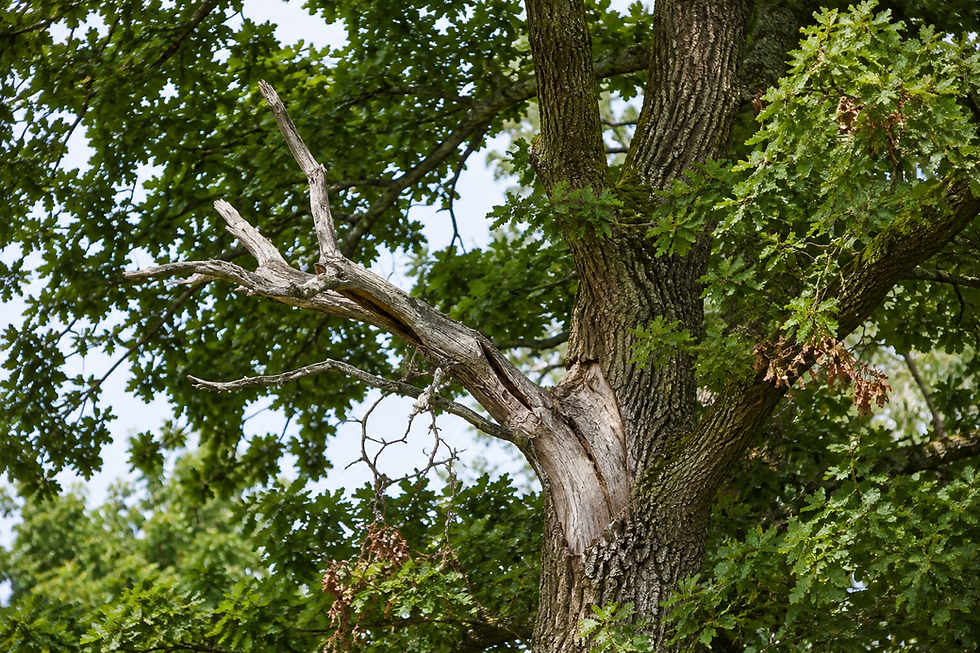
One of the most noticeable warning signs is large dead branches within the tree's canopy. Deadwood can become brittle over time, making it more likely to break and fall, particularly during strong winds or heavy rain.
Hanging or partially broken branches can also pose a risk to people, vehicles and buildings below. If you notice large branches that appear damaged, loose or unsupported, it's worth having the tree inspected.
2. Cracks or Splits in the Trunk
Cracks or splits in the main trunk or major limbs can indicate structural problems. These may develop due to storms, heavy branches, previous damage or natural weaknesses within the tree.
Not all cracks mean a tree is unsafe, but deep splits or cracks that appear to be widening should be assessed by a professional.
3. A Tree That Is Leaning
Some trees naturally grow at an angle, so a leaning tree isn't necessarily a cause for concern. However, if a tree has recently started leaning or its angle appears to be changing, it could indicate a problem with its root system or stability.
Look out for raised soil, exposed roots or cracks in the ground around the base of the tree, as these can be signs that the root plate is moving.
4. Fungal Growth Around the Base
Fungi growing around the base of a tree or on its trunk can sometimes indicate internal decay or root problems.
Certain types of fungal growth, including bracket fungi, can be associated with wood decay, which may weaken the tree's structure over time.
Although not all fungi indicate a dangerous tree, unusual growth around the trunk or roots is worth having checked.

5. Signs of Root Damage
A tree's roots play an important role in keeping it stable and supporting healthy growth. Damage caused by construction work, ground excavation, vehicles or changes to the surrounding soil can affect its stability.
If you notice exposed, damaged or decaying roots, particularly alongside changes in the tree's position, it may need a professional assessment.
6. Sudden Changes in the Tree's Health
A tree that suddenly starts losing leaves outside of its normal seasonal cycle, develops extensive dead branches or shows signs of significant decline may be experiencing an underlying problem.
Pests, disease, root damage and environmental stress can all affect a tree's health. While these symptoms don't automatically mean a tree is dangerous, identifying the cause early can help determine whether any work is needed.
When Should You Have a Tree Inspected?
If you notice any of these warning signs, it's worth arranging an inspection with a professional tree surgeon. They can assess the tree's overall condition, identify potential structural problems and advise whether pruning, remedial work or further assessment is necessary.
It's particularly important to seek advice if a tree is close to your home, driveway, garden or an area regularly used by people.


Comments